Small streams and panfish
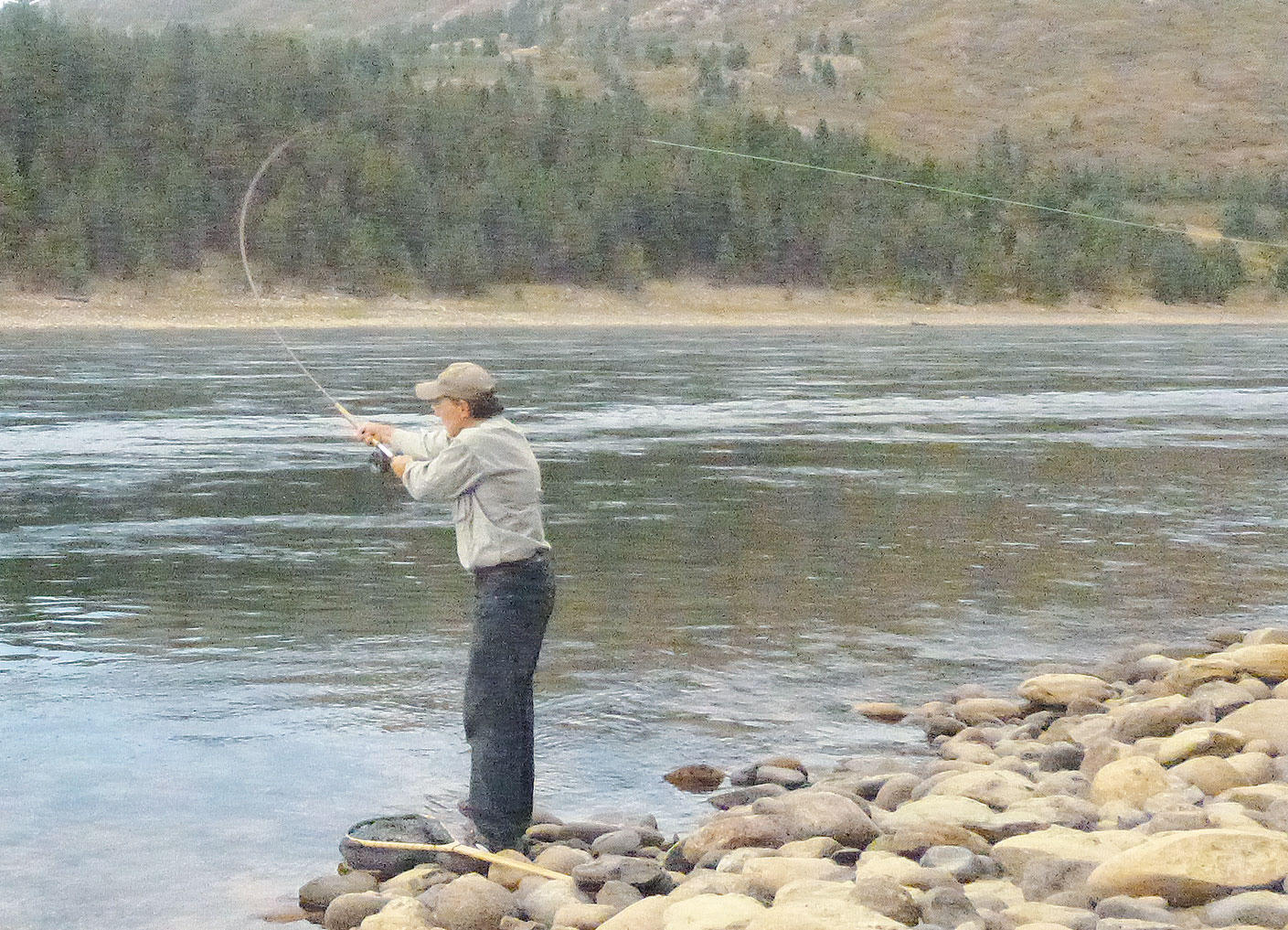
Short rods, 6'6" to 8', for brook trout, bluegill, and tight alder water. A 3-weight is a joy on a creek and undergunned on a windy tailwater. Delicate presentation, little power for a big streamer.
The stick
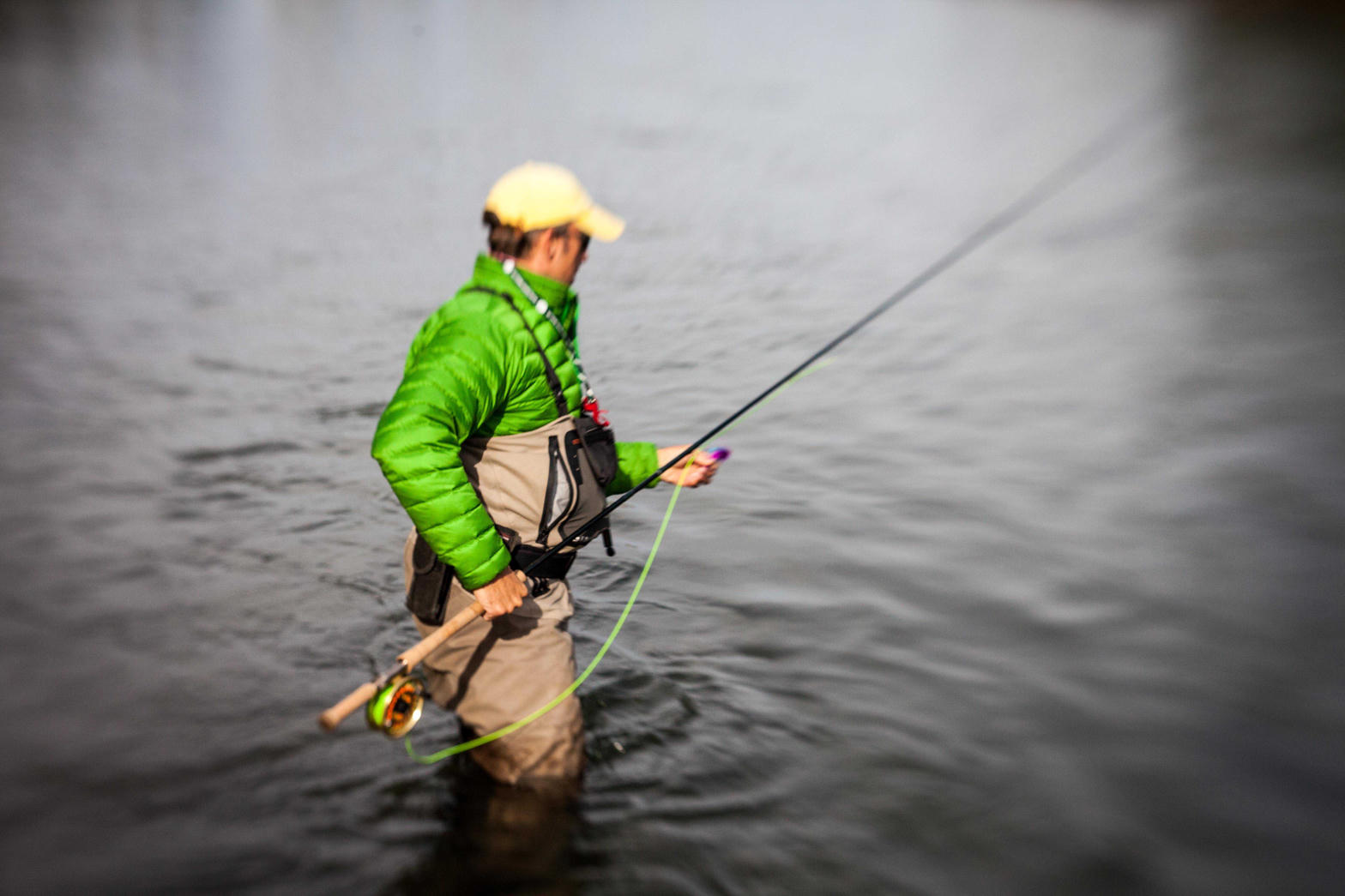
A fly rod is a line-weight, a length, and an action. Match those three to the water in front of you and the rest of the catalog can wait.
A typical trout rod reads something like 9' 5-weight, 4-piece, medium-fast. That is length, the line it is built to cast, how many sections it breaks into, and how much of the blank bends when you load it. Buy the line to match the number on the rod. A 5-weight line on a 5-weight rod is the whole game for most people.
If you only own one rod, make it a 9-foot 5-weight. It covers dries, nymphs, and small streamers on most rivers. Add other sticks when a fishery keeps telling you the 5-weight is the wrong tool.
By line weight
Line weight is the mass of the first 30 feet of fly line. Heavier line turns over bigger flies and fights wind. Lighter line lands softly and protects fine tippet.
As an Amazon Associate, Fisherman's Corner earns from qualifying purchases.
Short rods, 6'6" to 8', for brook trout, bluegill, and tight alder water. A 3-weight is a joy on a creek and undergunned on a windy tailwater. Delicate presentation, little power for a big streamer.
This is the standard. A 9-foot 5-weight handles Adams to size-8 buggers, dry-dropper, and light indicator nymphing. A 4-weight is a step softer for spring creeks. If someone asks what rod to buy first, this is the answer.
Weighted flies and bigger water. A 6-weight is the trout streamer rod and a fine stillwater stick. A 7-weight turns over bass bugs and handles light steelhead or big pike on the fly. You feel the extra backbone on the hookset.
The 8-weight is the saltwater workhorse: redfish, bonefish, striped bass, snook. It also covers big bass and pike. A 9-weight helps when the wind is up or the flies are heavy crabs. Look for a fighting butt and corrosion-ready hardware.
Built to lift a running fish and throw a large fly into wind. Not a first rod. Match a sealed-drag reel with serious backing. If you do not have a trip that needs this, skip it.
Slow (often fiberglass) flexes deep and is kind to beginners and small streams. Medium-fast is the all-round trout action. Fast recovers quickly, throws line into wind, and is less forgiving of a sloppy stroke.
7'–8' for pocket water and trees. 9' is the default. 10' helps nymphing and mending on wider rivers. Longer is not always better in brush.
Graphite is light and common. Fiberglass is slower and tough. Bamboo is a craft object with a deep flex — wonderful, and not what you learn on. Full comparison below.
Blank materials
Both cast a fly line. They do not feel the same, break the same, or suit the same water. Graphite is the default modern rod. Fiberglass is the slower, fuller-flex alternative people come back to on small streams and for the way it loads. For how that feels on the river, see graphite vs fiberglass fly fishing.
As an Amazon Associate, Fisherman's Corner earns from qualifying purchases.
| Graphite | Fiberglass | |
|---|---|---|
| What it is | Carbon-fiber composite. Most rods on a shop wall since the 1970s–80s. | Glass-fiber composite. The material that replaced cane for the mass market, then got pushed aside by graphite — and came back in modern S-glass and E-glass blanks. |
| Feel / action | Usually medium-fast to fast. Bends more in the tip. Recovers quickly. Easy to generate line speed for distance and wind. | Usually slow to medium. Bends deeper into the mid and butt. You feel the line load the whole stick. Casts are shorter and more deliberate. |
| Weight in hand | Lighter for the same length and line weight. Less fatigue on a long day and on a 10-foot nymphing rod. | Heavier blank. Fine on a 7' 3-weight creek rod; you will notice it on a 9' 8-weight. |
| Presentation | Can be delicate in skilled hands, but a fast graphite rod wants to throw. Easy to slap the water if you overpower it. | Soft landing is the point. Glass gives the fly time to turn over. Excellent for short, accurate casts under trees. |
| Wind and distance | Wins. Tight loops and line speed carry a fly into weather and across a wide tailwater. | Soft loops open in the wind. Keep glass for close work unless you enjoy the fight. |
| Fighting a fish | Power in the butt. You can put a fish on the reel and lift. Fast tips can bounce small hooks free if you horse them. | Deep flex cushions tippet and small hooks. A joy on brook trout and panfish; underpowered if you need to turn a big fish in current. |
| Durability | Stiff and strong along the blank, but high-modulus graphite can be brittle — car doors, rock strikes, and high-sticks crack it. | Tougher in the real world. Glass flexes where graphite snaps. Still not a pry bar, but it forgives a pack-rod life. |
| Best water | Most rivers, lakes, salt, travel kits, nymphing, streamers, wind. | Small streams, spring creeks, warmwater ponds, teaching a new caster, days you want to feel the rod work. |
| First rod? | Yes, if you want one stick that covers the most water — a 9' 5-weight graphite. | Yes, if your home water is a creek and you will not fight wind or throw size-4 streamers. Otherwise make glass the second rod. |
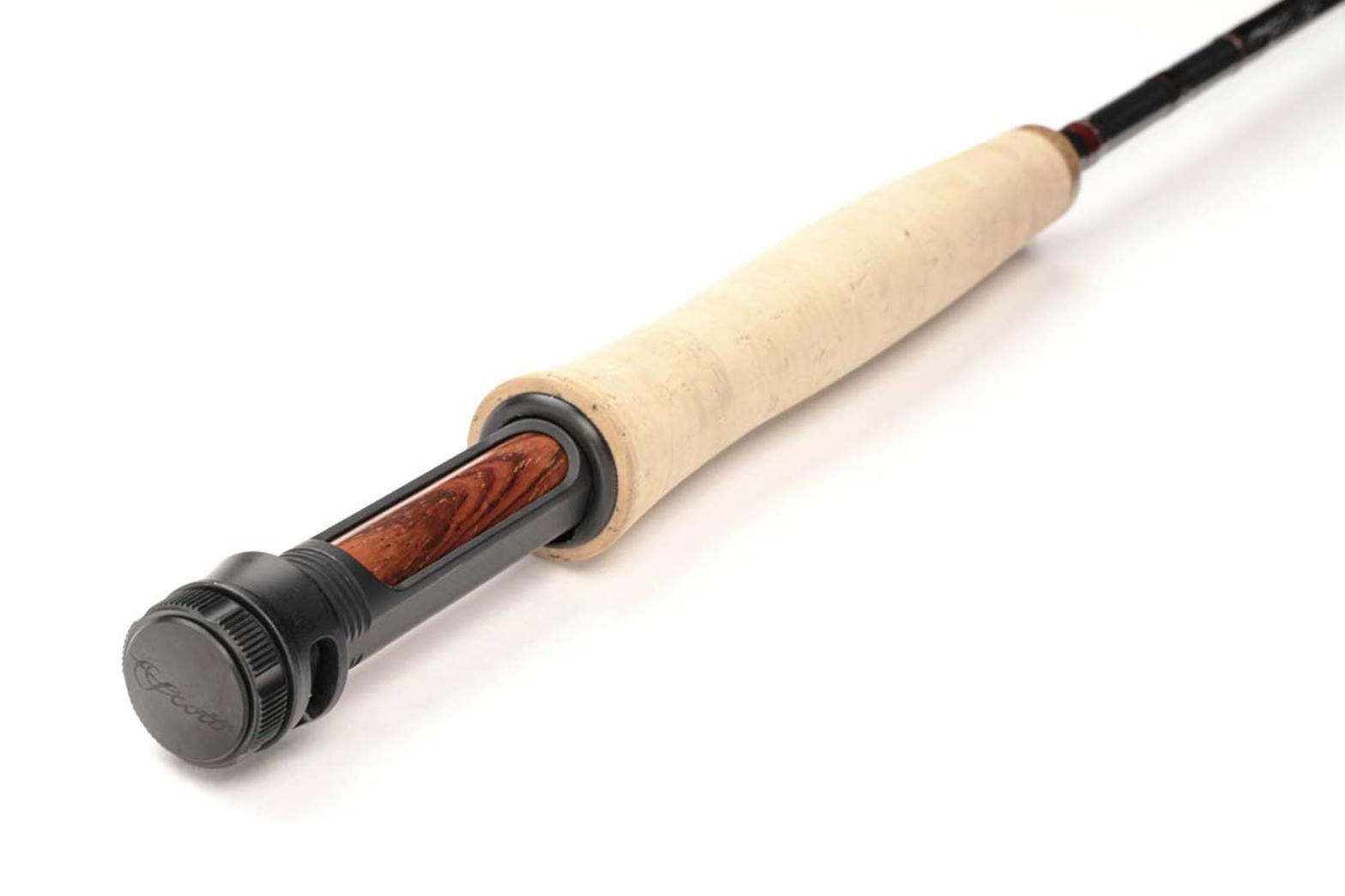
Travel, mixed hatches, indicator nymphs, a little salt, a little wind. Modern graphite is also what most lines and casting videos assume you are holding.
Pocket water, short casts, small fish, or you already own a fast graphite and want a different rhythm. A 6'6"–7'6" 3-weight glass rod is a classic creek tool.
Bamboo sits off to the side: deeper flex than most glass, more expensive, more care. Beautiful. Not required to fish well.
A switch rod (roughly 10'6"–11'6") can be cast single- or two-handed and is a favorite for trout Spey and light steelhead. A true Spey rod is longer, 12'–15', for big water and long two-handed casts when there is no room for a backcast. You need a matching Spey or Skagit line — a regular trout WF line will not load it.
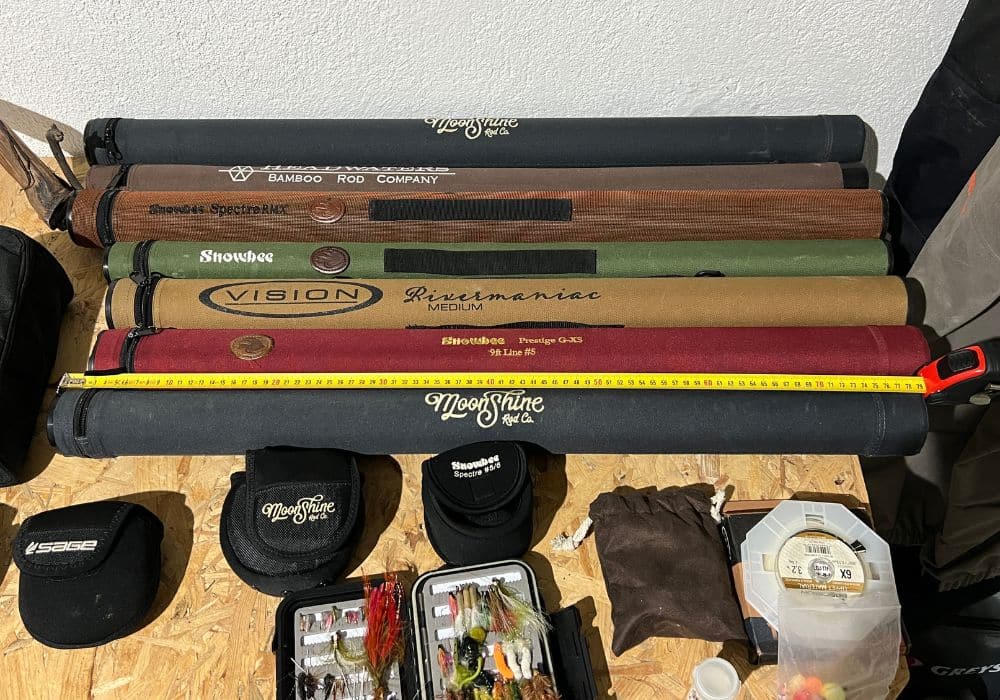
Four-piece 9-foot rods pack into a tube that fits a suitcase. Six- and seven-piece “pack” rods go smaller still. You give up a little feel at the ferrules; you gain a rod that actually arrives with you. A stout tube is part of the kit, not an accessory.
Ten- to eleven-foot 2- to 4-weights with a soft tip and a long reach, built for tight-line nymphing. They are poor dry-fly rods and excellent at keeping a thin leader off the water. Buy one when you already nymph more days than you fish dries.
Pair the rod with the right line and a reel that balances in the hand. See fly fishing and gear for the rest of the kit.
As an Amazon Associate, Fisherman's Corner earns from qualifying purchases.
Rod, reel, and line together so you can fish this weekend.
View on AmazonSealed reel and a rod that can live in the spray.
View on AmazonWeight-forward floating line in the same number as the rod.
View on Amazon